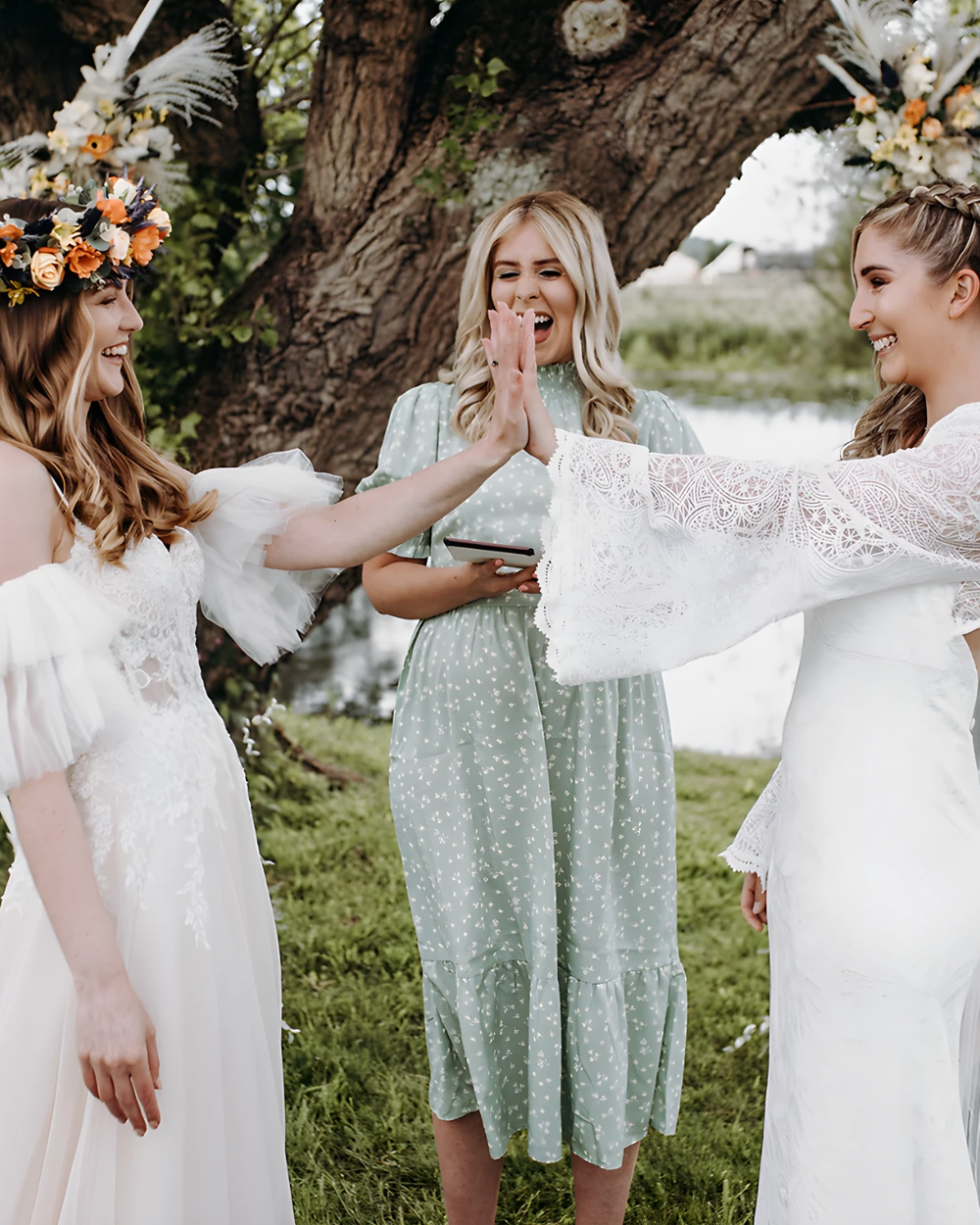
Managing family expectations and handling unwanted wedding opinions


Everyone has an opinion about your wedding. Parents, in-laws, aunts, cousins, friends of the family. Some opinions are helpful. Others are exhausting. And some come with strings attached, especially when family is contributing financially. Here's how wedding professionals see couples successfully navigate family dynamics without losing their minds.

The key is setting boundaries early and communicating clearly. It's your wedding, and families need to understand that final decisions sit with you. If you're hiring a planner, lean on them as a buffer. They deal with family dynamics regularly and can handle difficult conversations on your behalf. For specific areas like music or photos, be upfront about what you want and don't want.
- Set boundaries early: Have a conversation (or gathering) where you explain your vision and the roles you're offering
- Give family specific roles: If relatives want to be involved, direct them to contained tasks
- Use your planner: They can be a gatekeeper and handle difficult conversations for you
- Communicate with suppliers: Tell your DJ, photographer, and others about family sensitivities
- Be a united front: Make decisions together as a couple before presenting them to family
Why is family so difficult during wedding planning?
Wedding planning triggers family dynamics that might normally stay dormant. Money, tradition, status, past conflicts. It all surfaces when there's a big event to plan.
"Family expectations and relatives who want to get involved or give their opinion can be one of the most difficult parts of the wedding planning journey for a couple," acknowledges Bellissimo Weddings. "It can be extremely difficult to manage and couples should really be quite strong on this point."
The challenge is that family members often mean well. They're excited. They want to help. But their vision of your wedding might not match yours.
How do you set boundaries without causing drama?
Early, clear communication makes everything easier. Don't let assumptions build up.
"Perhaps from the beginning, a couple could organise a get-together, a nice meal or a drinks gathering with the family and set out what they've chosen," suggests Bellissimo Weddings. "Try to involve the family in some way by allocating them some roles if they feel like the family might want to have a role within the planning, and try to keep the family contained to that role."
The key phrase is "contained to that role." If you ask your mother to help choose flowers, that doesn't mean she gets to weigh in on the venue, the dress, and the guest list too.
"It's really important that families don't overstep their involvement because it can make things very tricky. But it really needs to come from the couple. At the end of the day, it's their wedding, not their family's."

Can a wedding planner help with family?
Absolutely. This is one of the less obvious benefits of hiring a planner.
"Lean on your wedding planner for this," advises Bellissimo Weddings. "As planners, we are often involved in managing tricky family politics and tricky family situations. It is something that comes up on a regular basis."
Good planners get to know your family dynamics early. "We spend quite a lot of time with our couples at the beginning to get to know them, to get to know their families, the family dynamics, and any particular issues or family difficulties that we need to be aware of from the beginning."
The planner can then act as a buffer. "Your planner can be your go-between, they can be your gatekeeper, they can be the person that perhaps gets family members to understand difficult decisions that have to be made. We often find ourselves in a situation where we are answerable, if you like, to the family. And we can deal with those situations instead of the couple having to deal with them themselves."
If you're not hiring a planner, you'll need to handle these conversations yourselves. Which brings us back to clear, early communication.
How do you manage family opinions about music?
Music is a common flashpoint. Parents want Frank Sinatra. Your mates want grime. Your partner's family expects traditional Irish music. Where do you draw the line?
"In terms of how couples can manage family expectations around music choices, I think that depends on how much the couple want other people to get involved," explains DJ Max Galactic.
If you don't want input, be direct: "If the couple really just want to influence the music themselves and don't really want to involve other people, then they need to be really clear with their family and key friends about that. And also they need to let the DJ know so that the DJ can be upfront with any people that come up and try and make requests."
If you're happy for family to contribute: "Gather from family and friends maybe one song that each person would like to hear, via email or a WhatsApp group. Then communicate that to the DJ via a separate playlist titled Family and Friend Requests."
This approach lets you include family input without handing over control. The DJ can balance both playlists and "get a sense of how closely the couple's musical demands match up with their family and friends."

How do you handle family expectations around photos?
Group shots often reveal family tensions. Who stands where? Who gets included? What about estranged parents who can't be in the same frame?
"Managing family expectations involves communication before the wedding," says Simon Biffen, wedding photographer. "Let them know what you want from your day and explain that you'll have key groups captured but don't want them to take up too much time."
Keep the list reasonable. "I usually recommend a maximum of 10 groups, with a good number being around six or so. These formal group shots serve as a historical record of important groupings."
And address difficult dynamics head-on: "If you have tricky family dynamics, such as estranged parents, make sure your photographer is aware. This will prevent anyone from being forced to stand next to someone they don't want to."
Practical help speeds things up: "Ask a few people to help gather those who are needed, which can speed up the process on the day."
Can you incorporate family traditions without losing control?
Yes, selectively. Including some family traditions or preferences can be a way to involve relatives while keeping the overall vision yours.
"Absolutely," says Ginger Catering Company about customising menus. "We quite often get sent brides' recipes that their mums had. Last year we did an Irish wedding and she wanted a Bailey's cheesecake. Same goes for Indian culture. We quite often get requests to incorporate or create fusion menus."
A family recipe on the menu, a traditional dance, a reading chosen by grandparents. These are meaningful ways to include family without compromising on the things that matter most to you.
Frequently asked questions
What if parents are paying and expect control?
Financial contributions don't automatically grant decision-making power. However, have a conversation early about what the contribution covers and whether expectations are attached. If strings are attached that you can't accept, consider declining the money.
How do we handle divorced parents who don't get along?
Tell your photographer, planner, and venue coordinator. They can manage seating, photos, and timings to minimise awkward encounters. You don't need to force reconciliation at your wedding.
What if one side of the family feels excluded?
Balance where possible. Include traditions from both families. Ensure both sets of parents feel acknowledged in speeches and throughout the day. Communication early helps prevent surprises.
Should we just do what family want to keep the peace?
Only if you genuinely don't mind. Resentment builds if you compromise on things that matter to you. It's your wedding. You'll live with the memories and photos.
- Family dynamics are genuinely difficult. Suppliers see it constantly. The couples who navigate it best are those who set boundaries early, communicate clearly, and present a united front.
- You can love your family and still insist on making your own decisions. Those two things aren't in conflict.