Designing your wedding cake: deadlines, changes and second thoughts


Booking the cake maker is the easy half. Then come the decisions: the design call, the flavour deadline, the moment one of you falls for a five-tier tower and the other checks the quote. Four cake makers on how the design process actually runs, and how much room there is to change your mind.
Most cake makers want the design finalised around three months out, when the rest of your styling is settled. Flavours can often wait until about a month before, for ingredient ordering. How late you can change the design depends entirely on whether it involves handmade sugar work: buttercream styles can flex to two weeks out, sugar-flower designs cannot.
- The design call sits about three months before the day, deliberately after your other styling decisions.
- Flavour deadlines are for shopping, roughly a month out, so ingredients can be sourced.
- Sugar flowers are the constraint: handcrafted details need scheduling, simple finishes stay flexible longer.
- Style-versus-budget disagreements are normal. Say what matters most to each of you, then let the maker rebalance the design.
- Tiered cake is no longer the only answer: sheet cakes, mille-feuille, pavlova and dessert tables are all on real menus now.
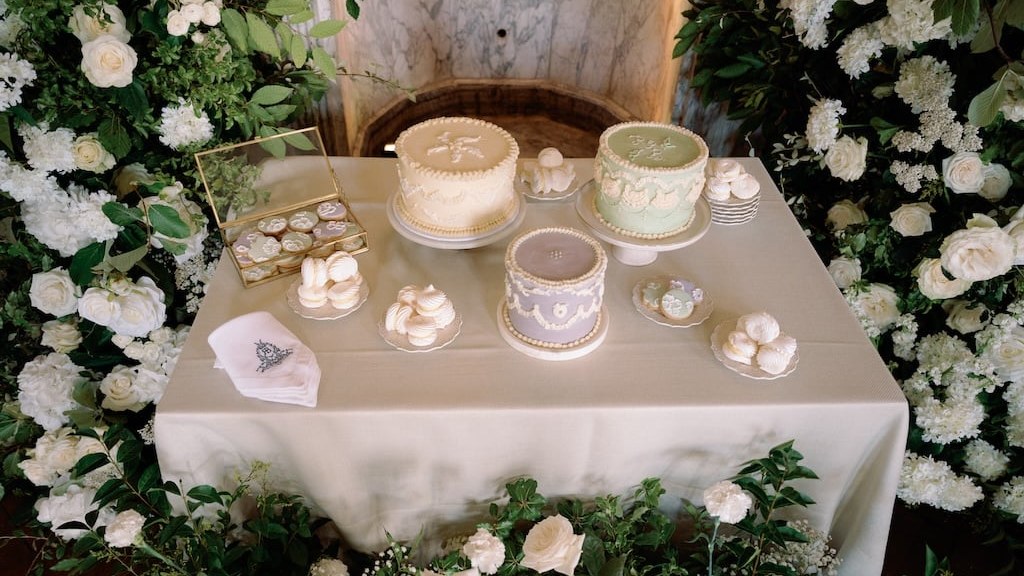
- The cake needs a place as well as a design: the cutting is one of the most photographed moments of the day, so give it a spot in the styling plan.
When does the design actually have to be final?
Around the three-month mark, and the timing is chosen for you, not against you.
"I prefer to get the design finalised at about the 3-month mark ahead of a couple's wedding date," says Sugar Plum Bakes. "At that point they should hopefully have most of the other details of their wedding design finalised, so they have a good idea about what they would like for their cake." Undecided at the call? "They have plenty of time to contemplate, and we can organise another call and finalise after that."
Sugar & Stories wants the same window, and explains the mechanics behind it: "If it's a complex design that involves lots and lots of sugar flowers, it would be good to schedule this in the production of the sugar flowers amongst the other wedding cakes I have, especially during a busy wedding season. As far as flavour goes, up to a month before, to allow for the sourcing of ingredients."
That's the pattern worth understanding: the design deadline is about the maker's calendar, the flavour deadline is about their shopping list.
When a person's artistry is limited because of a lack of trust, the individual creating the art might feel inhibited.
How late can you change your mind?
It depends almost entirely on what the cake is made of.
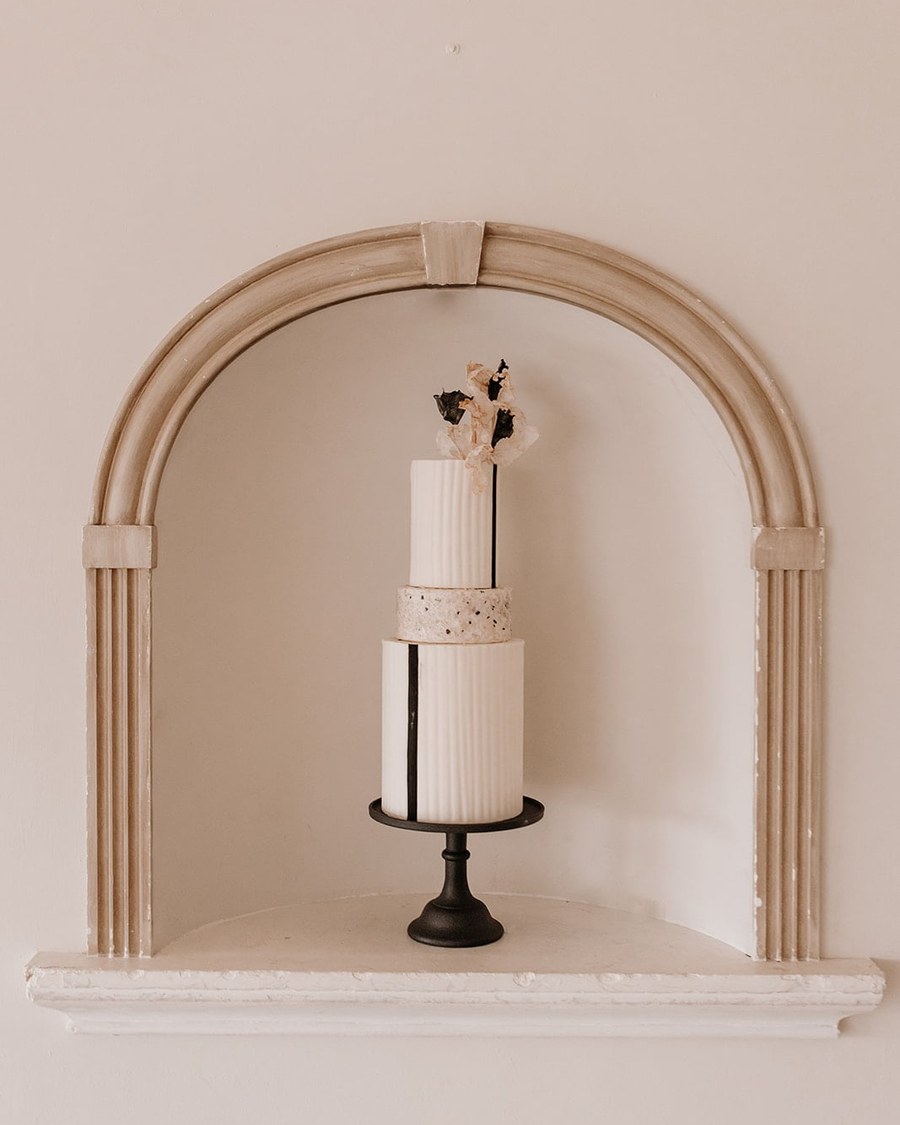
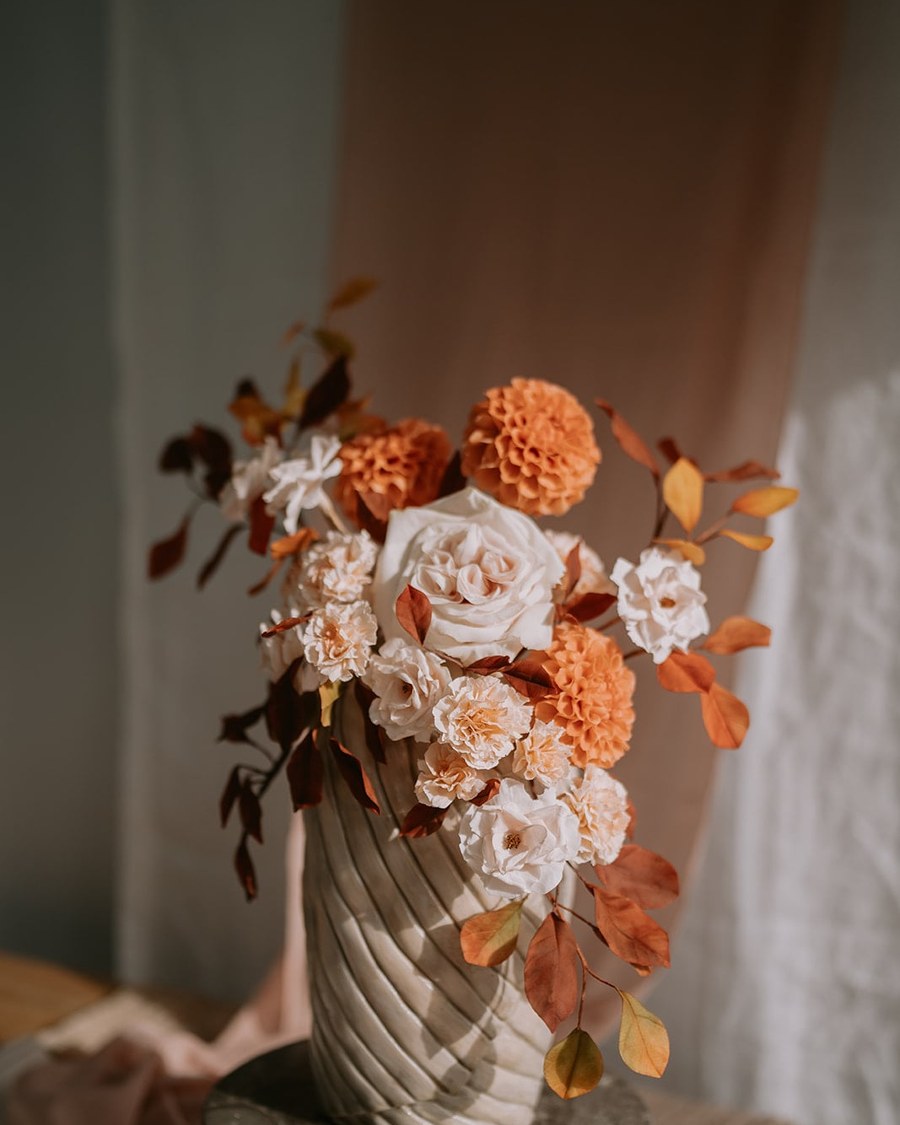
"As I'm not crafting handmade details like sugar flowers or wafer paper flowers, I have a bit more flexibility," says Sugar Plum Bakes. "I can actually accommodate final design changes up to about 2 weeks before the wedding date." She recently rebuilt a booking entirely when a couple moved away from her signature style, because nothing handcrafted had been started.
Valeria Dolci Cakes, whose work leans on exactly those crafted details, describes the other end: "It's completely natural for couples to have second thoughts, and I'm always very happy to guide them through those decisions. If more significant changes come in after the design has been agreed, it really depends on the timing and the extent. Some changes are absolutely possible, while others may affect the overall design timeline and cost."
There is a third limit, and it applies before any sugar work starts: a maker with a distinct style will not swap it for another. "Me, for example, I only make certain styles and types of cake. I don't offer buttercream cakes, for example. I'm a fondant specialist," says Louise Hayes Cake Design. "Some cake makers who do niche like this won't be prepared to compromise on that, so again, doing your research beforehand, making sure you like the look of a cake maker's portfolio is an important step." A change of mind that stays inside your maker's style is a conversation; one that leaves it usually means a different maker.
So before you book, ask two questions that predict everything: how much of this design is made by hand in advance, and how much of it sits inside this maker's usual style? The answers tell you how long your options stay open.
What if you two disagree about the cake?
Both makers treat this as ordinary, and both give the same first move: work out what each of you actually cares about, because it's rarely the same thing.
"Sometimes one person is drawn more to the visual impact whilst the other one is thinking more practically. Both perspectives are valid," says Valeria Dolci Cakes. "My role is to listen and help find a balance, maybe refining the design so it reflects their shared vision whilst still staying aligned with their investment."
Sugar Plum Bakes answers as someone 25 years into her own relationship: "Conversation and openness and compromise are the ways. If cake is a real priority for one of them, then the person who feels really strongly should be able to have something at least along the lines of what they're wanting. And if budget's a real issue, maybe there's a way of having what they would like but smaller or less costly."
Note the shape of both answers: the maker expects to be part of this conversation. A smaller version of the dream design is a normal request, not a cheeky one.
Sometimes one person is drawn more to the visual impact whilst the other is thinking more practically. Both perspectives are valid.
How do you brief a cake maker without micromanaging one?
Show them everything, then let go of the handlebars.
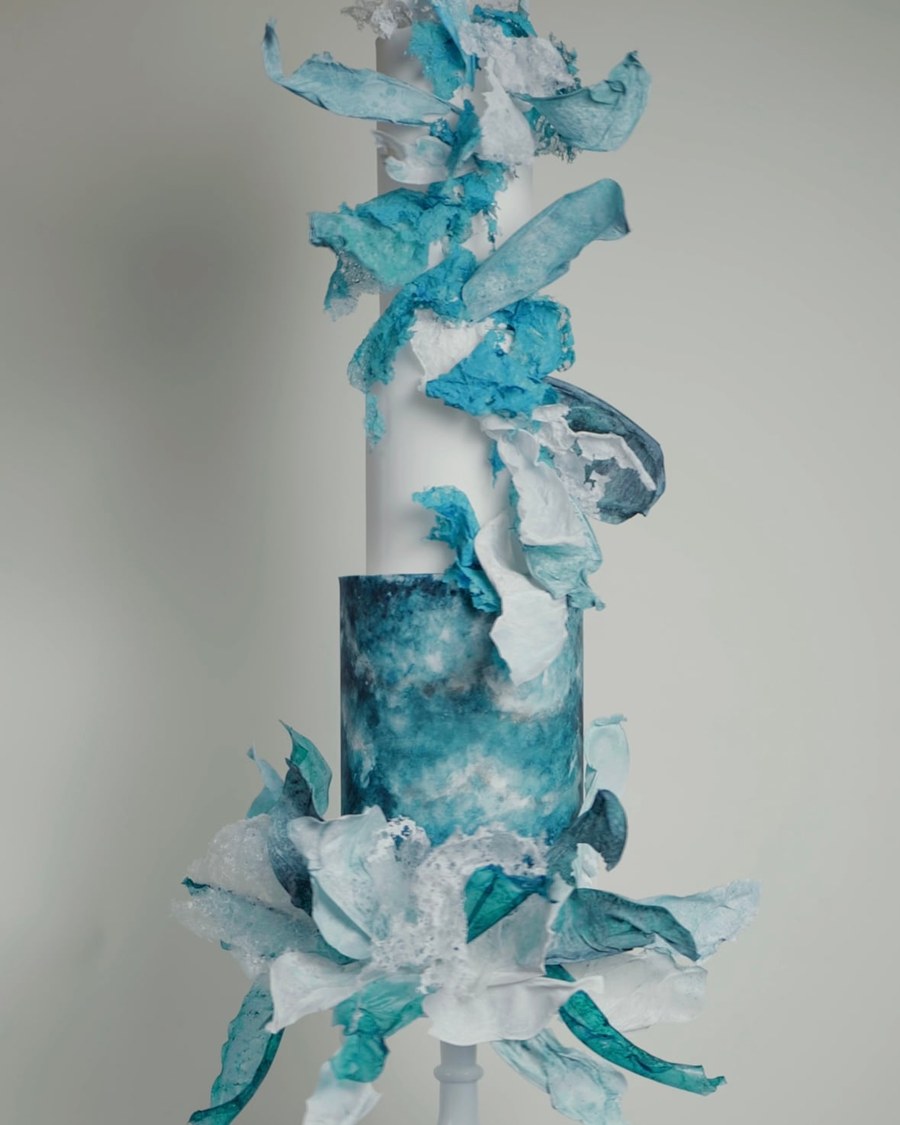
"A shared Pinterest board can be very helpful, but I also love seeing anything that reflects the overall aesthetic of the wedding, the venue, florals, tables, even the wedding dress," says Valeria Dolci Cakes. "Beyond the visuals, what's really valuable is simply talking about the feeling they want to create, the atmosphere, the mood."
Sugar Plum Bakes names the failure mode to avoid: "A couple has to trust the cake maker to create something along the lines of what they envisage without micromanaging, because at the end of the day it is a creative job. When a person's artistry is limited because of a lack of trust, the individual creating the art might feel inhibited." Check the portfolio and reviews prove the range you need, then commission the person, not the pixel-perfect replica.
What comes back after that conversation varies with the kind of maker you've chosen. "The more bespoke style of cake maker will generally offer designs and sketches to their couples," says Louise Hayes Cake Design. "Personally, I put a design proposal together for my couples following our consultation (where I gather information about their wedding and what's important to them from their cake), and I will include 3 or 4 design sketches as part of their proposal."
The opposite kind works from a catalogue of designs, or from a picture you bring them. "Therefore, if you are looking for a bespoke design that's individual to you and your wedding, it's best to approach a cake maker who specialises in that type of cake."
What if you don't want a tiered cake at all?
Then you're in luck, because the alternatives have gone from novelty to menu.
"Couples are definitely looking to have something a bit fresh and a bit different," says Sugar Plum Bakes, who now offers "large single-tier cakes inspired by the Italian-style wedding cake, mille-feuille with puff pastry, crème pâtissière, whipped cream and fresh fruit, and a pavlova-style cake, two layers of meringue filled with cream and fruit. This style really suits a couple looking for a more laid-back wedding where flavour and freshness matter most."
Valeria Dolci Cakes sees the same movement: "Long sheet cakes are very popular, trays of tiramisu, mille-feuille cakes often assembled fresh on the day. We're also seeing elegant dessert displays, macaron towers, madeleine towers, small bite-sized desserts. These work beautifully either on their own or alongside a traditional cake."
I transport my cake tiers separately. In the event of an emergency brake, I wouldn't want to risk the wedding cake toppling.
Where should the cake actually go?
Somewhere it can be seen. Position is the one design decision that never makes the mood board, and the makers notice.
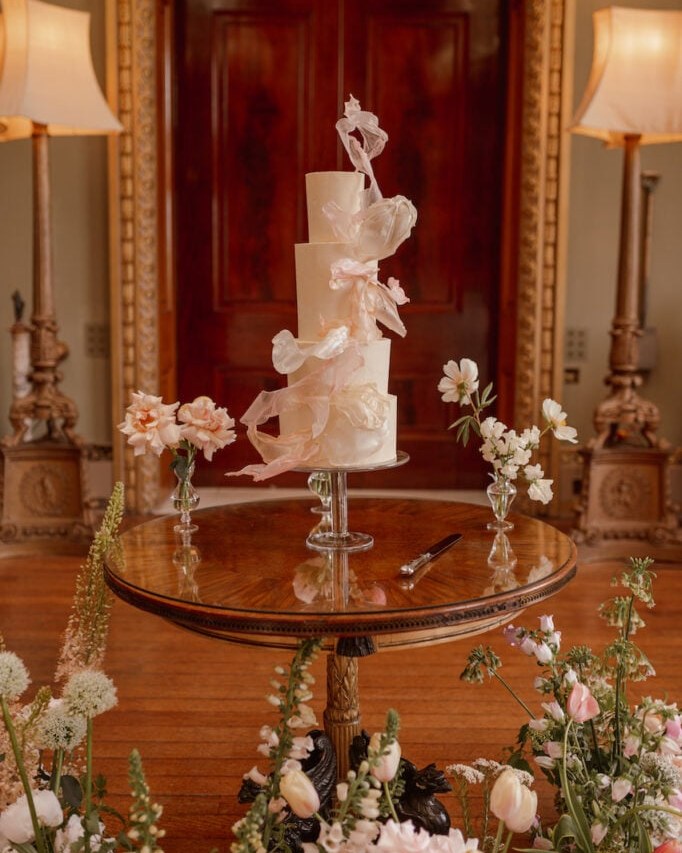
"There is nothing more upsetting as a wedding cake maker than walking into a venue and seeing your cake being stuck in a corner," says Louise Hayes Cake Design. "It's likely to be the most money a couple will ever spend on a cake, so you need to make it a centrepiece, whether that be placing it in a focal point at your venue, at the top of a grand staircase, for example, outside in a beautiful courtyard, or just creating beautiful draping displays on the table it's positioned on, surrounded by florals or an abundance of candles. Anything that really draws attention to your cake."
Her reason is practical: "Your cake cutting is one of the most photographed moments of your day, so make sure the way your cake is set up and styled is perfect."
So give the cake one line in the styling conversation with your venue and florist: a table with a backdrop, flowers or candles around it, somewhere people naturally pass. It costs nothing to decide, and it is where the photographs happen.
Frequently asked questions
Can cake makers handle halal, kosher or other faith requirements?
Ask early and specifically. "I can cater for halal weddings: no pork-derived ingredients, no gelatine derived from animals, no alcohol. I've catered many eggless cakes for Hindu weddings," says Sugar Plum Bakes, who doesn't offer kosher. Some requirements need specialist suppliers, says Valeria Dolci Cakes, so raise them at the first conversation.
What happens if the cake maker falls ill before the wedding?
Most solo makers keep a trusted network for exactly this. "My first step would be to reach out within that network to see if someone of a similar standard could step in," says Valeria Dolci Cakes, with a full refund if not. Sugar Plum Bakes suggests asking a newer maker what their backup arrangement is, since their network may still be growing.
How long does setup take on the day?
Sixty to ninety minutes is typical, up to two hours for tiered cakes with fresh flowers added on site. Makers assemble at the venue rather than transporting a stacked cake, so build that window into the room turnaround.
How much is the deposit to book a cake maker?
"Deposits and payments can vary by cake maker, but typically wedding cake makers ask for a £100 booking fee to secure your date," says Louise Hayes Cake Design. Larger orders can carry more, because they take longer to make and block a bigger stretch of the maker's calendar.
When is the final balance due?
Between one and three months out, depending on the maker: some tie it to the design call, others invoice one to two months ahead so they can order the ingredients and materials for your cake. Many, Louise Hayes Cake Design among them, will set up a payment plan that spreads the cost between booking and the day, so ask when you book.
Do we need to have everything decided before the design call?
No. The call is three months out precisely so your venue, flowers and colours are settled first. Arrive with those and the cake conversation mostly answers itself.
- The cake process is friendlier than its deadlines make it sound. Three months out for the design, a month for flavours, and a maker who expects second thoughts and disagreements because every couple has them. The one thing that genuinely narrows your options once you're booked is handcrafted sugar work, so ask how much of your design is made in advance, and you'll know exactly how much freedom you have left.
- And if the tiered tower was never really you, say so. The pavlova is on the menu now.