Nervous about your vows? What celebrants actually do about it


Somewhere between the proposal and the planning spreadsheet, a quiet dread sets in for a lot of people: you'll have to stand up in front of everyone you know and say something profound. Two celebrants deal with this every week, and their answer is not "you'll be fine". It's a menu of ways to make the moment fit you.
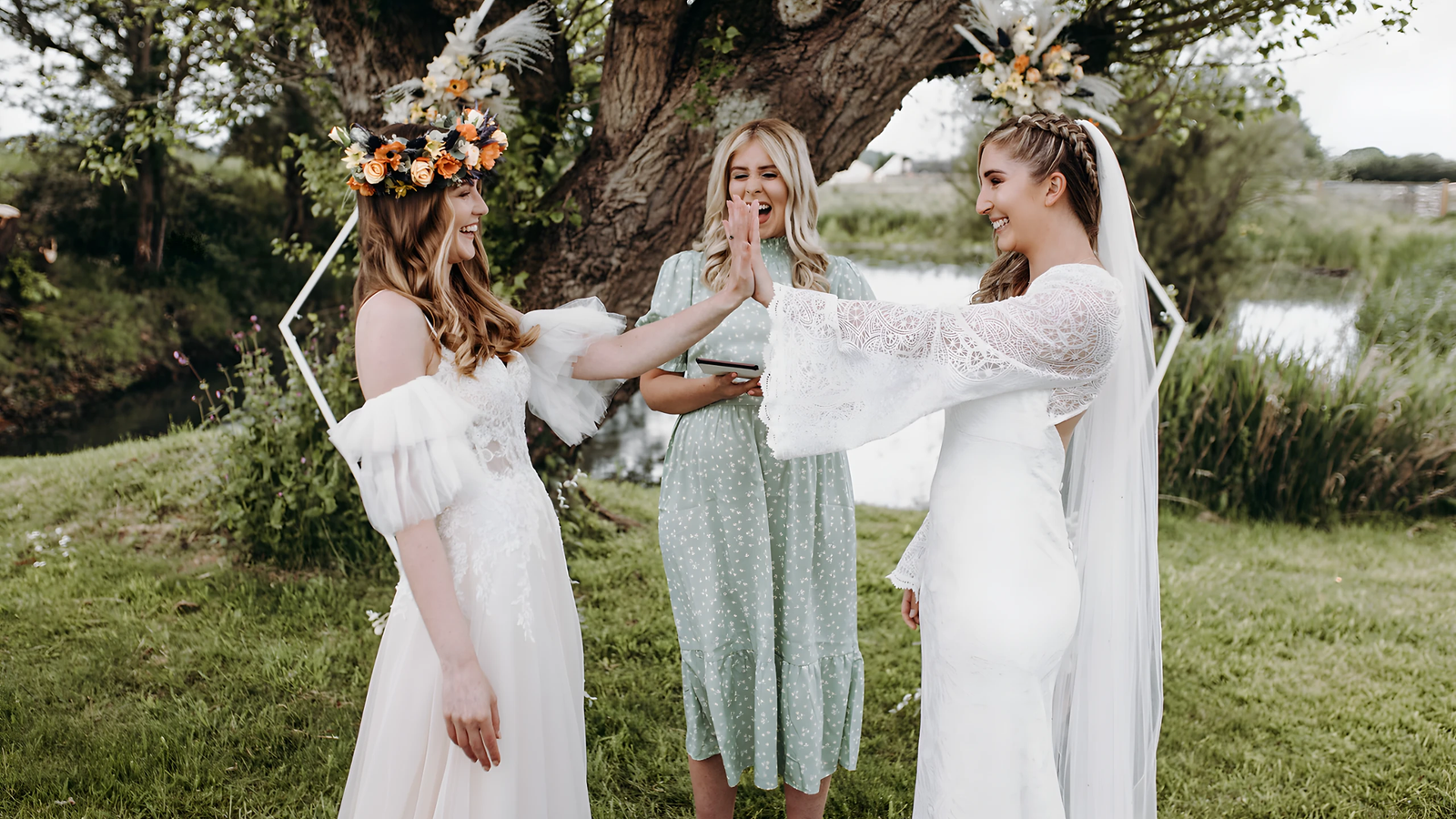
You have more options than you think. Personal vows are optional, not required; a celebrant can help write them, or read them for you; and you can sit down, face away from your guests, or say as little as two words in the whole ceremony. The one rule celebrants repeat: your vows are for your partner, not the audience.
- Personal vows are not compulsory. Traditional or modern set vows are always an option.
- You speak to your partner, facing them, not the room. As long as they can hear you, it's worked.
- Most good celebrants offer vow-writing help, one to one, and can read vows on your behalf.
- Your vows don't have to match: one of you can write pages, the other can keep it short.
- Sitting down, minimal speaking, and choosing where you face are all allowed. It's your ceremony.
Do we have to write our own vows at all?
No, and hearing that from a celebrant rather than a well-meaning friend seems to help.
"You don't have to do personalised vows if you don't want. There's absolutely nothing saying that that is a necessity in any way, shape or form," says Roxy Celebrates Love. "You're very welcome to go with the traditional vows, and your celebrant will have a variation of modern vows that you're able to look at and pick from."
And if you write them and the moment overwhelms you anyway, there's a fallback most couples never hear about: "I've actually delivered the vows on behalf of a groom before," she adds. "Maybe they've been overcome by emotion, maybe they've just felt really shy standing up there. Know that there's many options."
Remember your vows are for your partner and nobody else. You'll be looking at them. You won't be facing your guests.
Who are the vows actually for?
This is the reframe both celebrants reach for first, and it does most of the work.
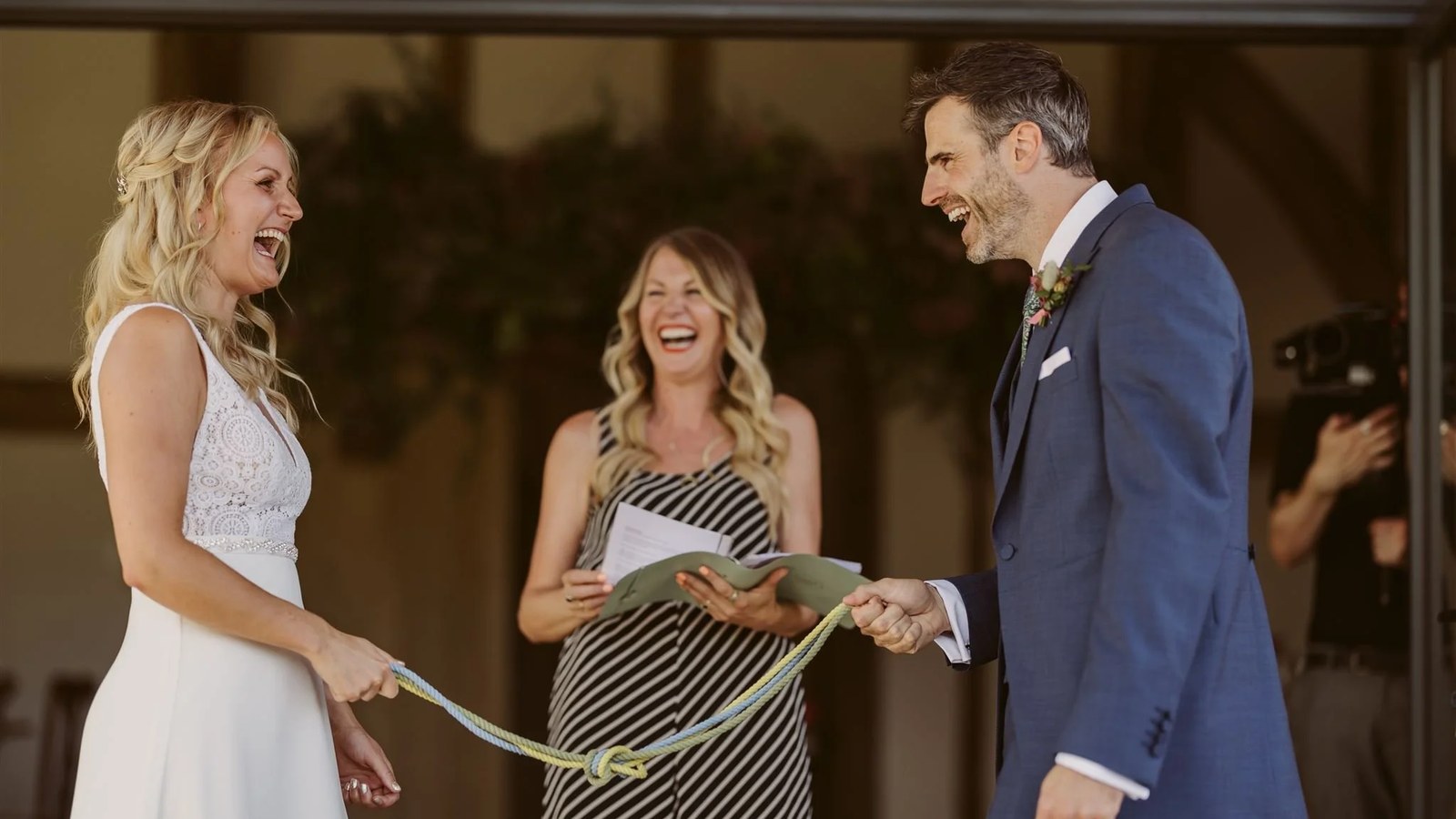
"Remember your vows are for your partner and nobody else," says Laura Crockett Celebrant. "When it comes to this moment in the ceremony, you're going to be reading your vows to your partner, so you'll be looking at them. You won't be facing your guests. You don't need to speak too loudly. As long as your partner can hear you, that is the most important thing."
Most vow anxiety is public-speaking anxiety wearing a suit. But structurally, this moment isn't a speech: the audience is one person, standing close enough to whisper to. Everyone else is overhearing.
What if we're anxious about the writing itself?
Ask your celebrant before you sit staring at a blank page, because helping is part of the job.
"If you are feeling anxious about writing them, then speak to your celebrant and see if this is something they can help with," says Laura Crockett. "Personally, I offer a vow writing service in all of my ceremonies, where I work with each partner individually. We'll work together on a Zoom call or over WhatsApp, and I'll give them suggestions." She also checks the two sets against each other, so nobody arrives with three pages while their partner has three lines.
"Most good celebrants should offer that service," agrees Roxy Celebrates Love, "so you needn't feel alone and in the dark with it."
I can read out the vows, and all you need to do is say 'I do'. Literally two words throughout the entire ceremony, if you choose.
What if one of us wants personal vows and the other doesn't?
Then you do different things, and it's fine.
"Often this happens. There might be a bit of a mismatch: one person might feel more confident being outspoken and talking about their feelings in front of a group, and the other not so much," says Roxy Celebrates Love. "The most important thing is that everyone feels really comfortable up there on the day. It doesn't need to be that your vows completely perfectly match up. One person can speak to the extent that they feel appropriate for them, and their partner can do something different."
That's worth sitting with, because couples often assume symmetry is the rule. It isn't. A ceremony where one of you reads something long and one of you says something short and true is not unbalanced, it's accurate.
What if being the centre of attention is the real problem?
Then the ceremony changes shape around you, which is much of the point of having a celebrant.
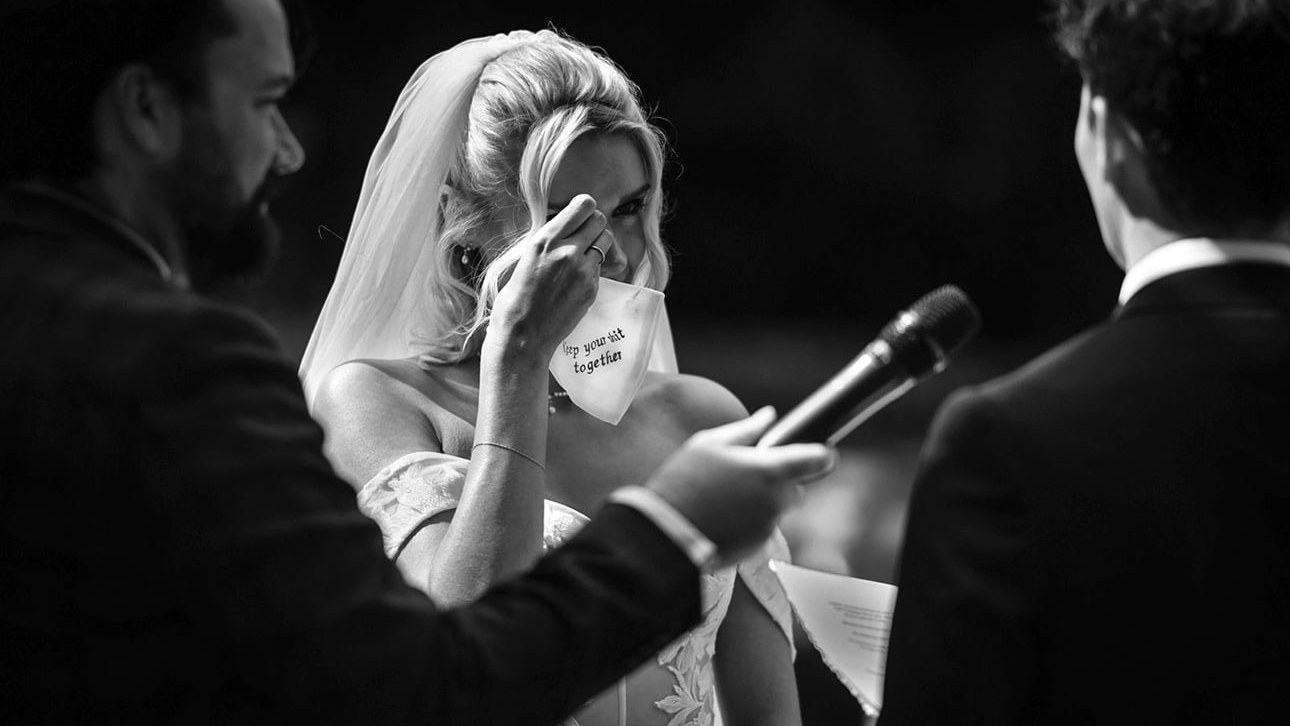
"You don't need to do anything, and shouldn't do anything, that doesn't feel authentic and make you feel really comfortable," says Roxy Celebrates Love. "You can choose to sit down throughout. You can choose where you want to be positioned, who you want to face. A lot of people feel a lot more comfortable when they are sitting down rather than standing up. You can also say a minimal amount. I as the celebrant can read out the vows, and all you need to do is say 'I do'. Literally two words throughout the entire ceremony, if you choose."
None of this is a lesser ceremony. It's the ceremony designed for the people actually in it.
It doesn't need to be that your vows perfectly match up. One person can speak to the extent that feels appropriate for them.
Frequently asked questions
Can the ceremony include another language?
Yes. "You can opt to work with a celebrant who speaks different languages, or have a guest come up and do an element in a different language," says Roxy Celebrates Love, who has had whole sections translated so guests weren't left behind.
What if we don't like the first draft of our ceremony?
Say so. "There's no expectation that they've got to love it immediately," says Roxy Celebrates Love. "Any good celebrant shouldn't charge for additional edits and rewrites." The draft is a starting point, not a verdict.
Can a ceremony honour two different backgrounds without dragging?
Yes. "You'd be surprised at how much you can fit into a 30-minute ceremony without it feeling too long," says Laura Crockett. Independent celebrants can weave in religious and cultural elements from both sides, through storytelling or symbolic moments.
What happens if the day runs late?
With a celebrant, very little. "Registrars operate in very strict 15-minute blocks. A celebrant ordinarily just does one ceremony a day," says Roxy Celebrates Love. "Your celebrant isn't going to leave the ceremony space and go off to their next wedding."
When should we sort all this out?
At the planning meeting, months out. Celebrants typically send a questionnaire and meet properly around six months before the day, which is when positioning, vow format and who-reads-what all get decided calmly.
- The wedding industry quietly assumes everyone wants a microphone moment. Celebrants know better, because they stand next to nervous people for a living. Every part of the ceremony that frightens you is adjustable: the writing, the delivery, the standing, the facing, even the speaking itself.
- So don't start by drafting vows. Start by telling your celebrant which part you're dreading. The good ones have an answer for each, and you've just read most of them.