What to do when wedding planning gets overwhelming


You said yes to a party and somehow ended up project managing one. There's a spreadsheet now. Three people have opinions about the chairs. You opened Pinterest for five minutes and lost an hour, and you still haven't replied to the caterer. If planning has stopped being fun, you're not doing it wrong.
Wedding planning stress usually peaks in the last six to eight weeks, when every supplier needs answers at once and decision fatigue sets in. The suppliers we asked agree on three things: write down what's actually worrying you, separate what you can control from what you can't, and trust the people you hired to do their jobs.
- The overwhelm is not random. It clusters in the final six to eight weeks, when suppliers need answers together.
- Write the worry down. Anything you can act on becomes a task; anything you can't, you can stop carrying.
- Order your list by budget, not by what's loudest. The biggest spend deserves the most thought.
- Suppliers who've worked your venue at your scale have answered your question before. Ask them.
- If you're micromanaging, that's information. It usually means you booked someone you don't quite trust.
Why does it hit hardest six weeks out?
The stress rarely arrives evenly. It arrives all at once, near the end, and there's a structural reason for that.
"It's especially true towards the end of the wedding planning journey, in those 6 to 8 weeks prior to the wedding, when all the suppliers working on the wedding will ask for more of your time and need answers to make sure that everything's coming together nicely," says Smitten with Ink, a wedding stationer. "Decision fatigue can happen and many couples will feel a little bit overwhelmed."
That's worth knowing in advance, because it reframes what's happening. You haven't suddenly become worse at this. Eight or nine businesses have all reached the point where they need final numbers, and they've reached it in the same fortnight.
Their advice for that window is to narrow what you're listening to. "Shut down the noise around you, for example all the unsolicited advice from friends or family, or the endless Pinterest scrolling, and focus on your to-do list," they add. "Just little by little, tick those boxes away, one decision at a time."
Shut down the noise around you, and focus on your to-do list. Little by little, tick those boxes away, one decision at a time.
What actually helps when you're in the middle of it?
The most practical thing anyone said was also the simplest: get it out of your head and onto paper.
"I think it's good to maybe write down exactly what it is that's stressing you out," says Lauren Garfitt, a hair and makeup artist who got married herself last year. "Because if it's things that are in your control then you can do something proactive to actually face it head on. But if you can't do anything about it, then there's no point in stressing about it."
That sorting move does more work than it looks like. Most planning anxiety is a single undifferentiated pile, and about half of it is weather, other people's feelings, and things that will resolve themselves. Splitting the pile turns some of it into tasks and lets you put the rest down.
Bewilderly, a stationery designer, points at the other half of it. "Take a step back, lean on your partner, and just know that as long as you're both there together on the day, that is the main purpose why you're doing it. And share the responsibility as much as you possibly can with your partner. Make sure that you're talking to each other and getting your feelings out."
Worth saying plainly: if one of you is carrying the whole thing, that's usually the actual problem, not the guest list.
Does it matter what order you do things in?
It does, and the ordering principle that came up is not the obvious one.
"When you become overwhelmed with the tasks or the choices, I recommend that couples write a list of their priorities, and it's important to put this into budget order of priority," says Paper Stories Co.
So not chronological, and not by whatever is making the most noise. By spend. The decisions attached to the biggest numbers get your best thinking, and the ones attached to small numbers get whatever's left. It's a way of making sure you don't spend three evenings on favours and twenty minutes on catering.
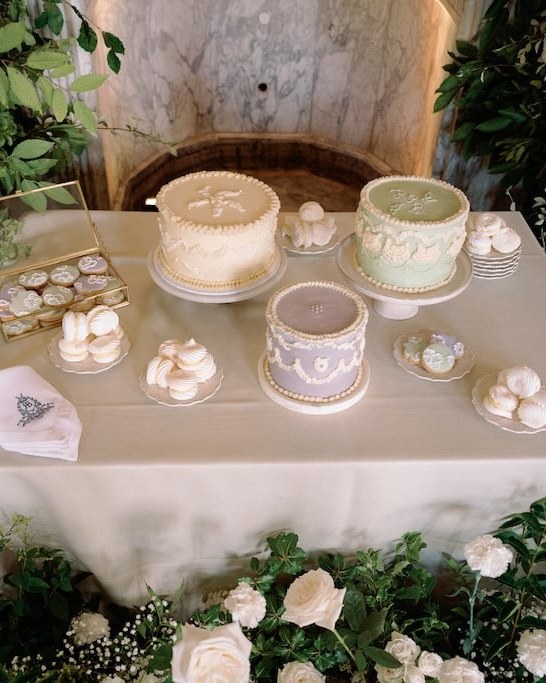
They also make a case for deliberately doing less. "With regards to design and stationery, I think it works well to focus your attention on one main design feature, rather than spreading it too thin across the wedding and giving yourself lots of little tasks to complete. For example, having one styled table can work really well."
If it's things that are in your control then you can do something proactive. If you can't do anything about it, there's no point stressing about it.

Why does choosing suppliers well make everything easier later?
Three suppliers, in different categories, independently gave a version of the same answer: most planning stress is downstream of a booking decision you already made.
"My top tip to couples who are feeling stressed or overwhelmed, and it is a very overwhelming process, is to make sure that you have picked the suppliers who you know you can trust and allow them to have the creative freedom that will make sure they can bring your vision to life," says Burton's Blooms, a florist. "Without that trust and the portfolio to back it up, it's really hard then to not try and micromanage."
That's a useful diagnostic. If you're checking in constantly, rewriting someone's brief, or bracing for their emails, the discomfort probably isn't a scheduling problem.
Lavender Green Flowers frames the same point as a reason experience matters. "The whole point of picking established suppliers who have experience at your venue or with weddings of the size and the scale that you're looking for is that they've done this before, so that any question that you have that might feel overwhelming, they will most likely have an answer for."
And Sabrina Duparcq Hair & Makeup Agency suggests looking past the service itself when you choose. "Look into what they're offering outside of the service. So for example a hairdresser, a makeup artist, are they also offering helpful tips, guides, a direct contact service? What else are they offering above and beyond?"
What do planners do that couples could copy?
You don't need to hire a planner to use how they work. Both planners we asked described the same thing: a system, not willpower.
"Couples who enjoy planning either have a wedding planner who is guiding them through the process, or without a planner, they have still sat down, created a plan of action, created an understanding together, know a budget, are working together to work out exactly what they want and what they don't want," says Events With Rio. "Couples who find it stressful either haven't got a planner by their side or are making things up as they go along."
Bellissimo Weddings is specific about the mechanics, and the advice survives having no planner at all. "If you're choosing not to have a planner, then we would always recommend that you have a system where everything is stored. Maybe create yourself a wedding email or a wedding website where all of the information can come together."
One inbox. One document with the timeline in it. One place the budget lives. They also flag the part that catches people out: "Seating plans can often be a really difficult element. And the RSVP service, sending out the invitations, receiving their replies, chasing up for non-replies, checking on dietary requirements. That can often be a really stressful part of the process."
If you're going to build one system this year, build the one that tracks who has replied.
Without that trust and the portfolio to back it up, it's really hard not to try and micromanage.
Frequently asked questions
Is it normal to feel this stressed about a wedding?
Yes. "It is a big day, it's a lot to organise, it's a big investment and I feel like it's okay to feel a little bit stressed," says Lauren Garfitt. Naming it as normal takes some of the weight out of it.
When is wedding planning at its worst?
The final six to eight weeks, when suppliers all need final answers at once. Knowing that window is coming lets you clear your diary for it rather than being surprised by it.
Should we tell our suppliers we're struggling?
Yes. Established suppliers have taken hundreds of couples through this and have usually answered your question before. A good one would rather hear from you early than fix something late.
How do we stop wedding talk taking over everything?
Book time where it's banned. Smitten with Ink suggests going on "a date where planning chat is banned", which sounds small and is surprisingly hard, which is rather the point.
We disagree about how much any of this matters. Now what?
Do the budget conversation before the detail. Events With Rio puts most planning conflict down to couples who "rush into planning without having set a budget, working out the couple's differences, what each other wants".
- The suppliers who deal with this every weekend don't say the stress is avoidable. They say it's predictable, which is more useful. It peaks late, it comes from too many decisions arriving together, and most of it responds to three things: putting the worry into words, ordering what's left by what it costs, and letting the people you hired do the job you hired them for.
- If you're in the thick of it now, the smallest useful next step is a list, in budget order, with the things you can't control crossed off it.
Expertise from