Where Assist's answers come from


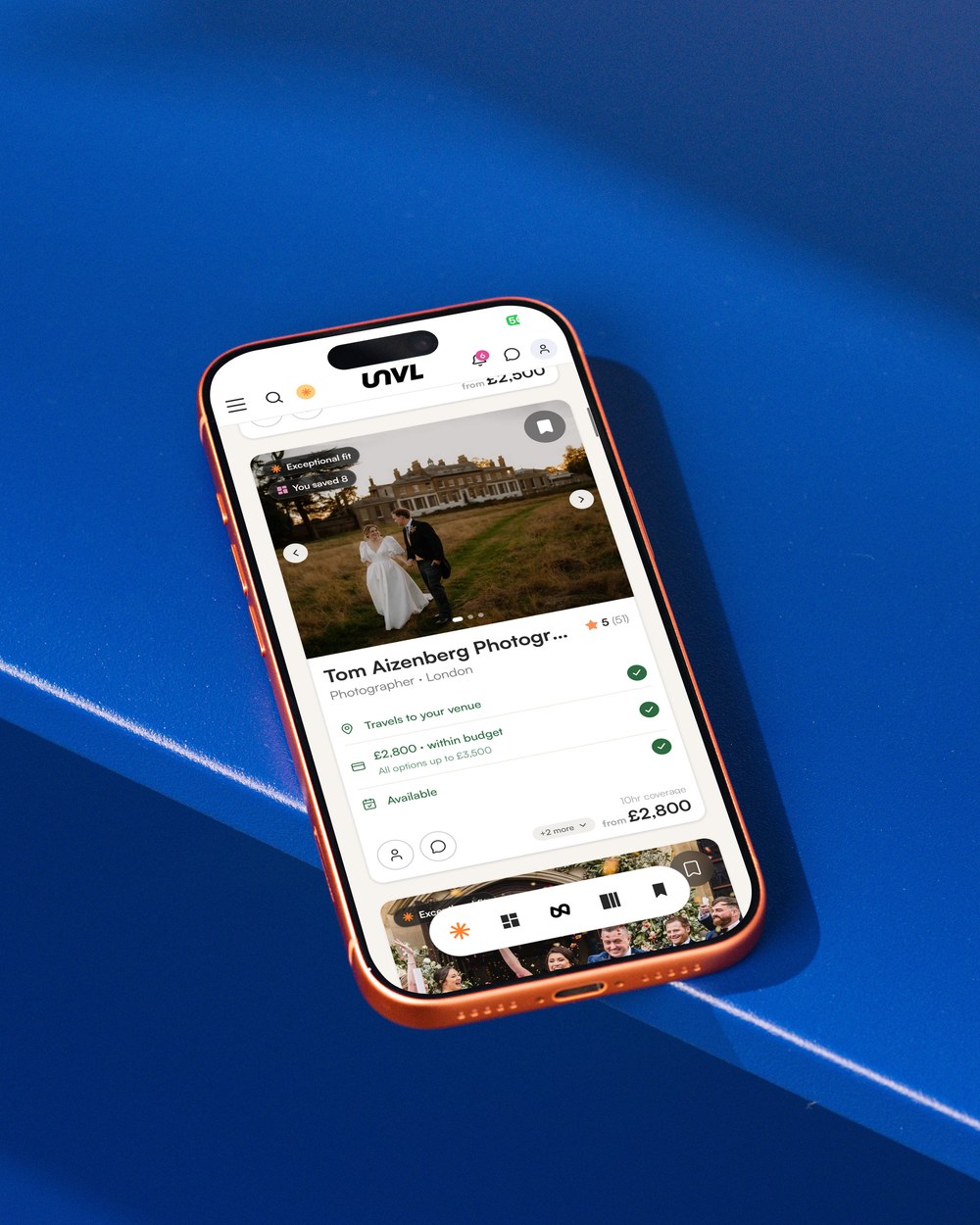
Every article on this hub is built from what named suppliers said, and each one names them. Assist is the same idea made conversational: you ask about your wedding, and the answer draws on the same supplier knowledge, with the supplier who said it attached. Here's the machinery, in the open.

Suppliers on UNVL record answers to real planning questions in their own words. Each answer is quality-scored and reviewed before it can be used, then becomes part of the knowledge Assist draws on. When Assist uses a supplier's knowledge, it says whose it is, and when it doesn't have grounding for a question, it says that too instead of improvising.
- The knowledge base is built from real suppliers answering real questions, in their own words.
- Every answer is quality-scored and approved before Assist can ever use it.
- Answers credit the supplier they came from, the same policy as this hub.
- Assist also knows your wedding: your date, budget, bookings and plans, so answers fit you, not "couples in general".
- When it doesn't have supplier knowledge for something, it says so rather than inventing an answer.
It starts with suppliers, not scraping
The knowledge underneath Assist wasn't harvested from the internet. It was contributed, deliberately, by the suppliers on this platform.
A photographer gets asked what happens if their equipment fails. A cake maker gets asked how far ahead couples should book. They answer in their own words, often by simply talking, the way they'd answer a couple across a table. Those answers, from working UK suppliers across venues, photographers, florists, caterers, cake makers, stationers, celebrants, musicians and more, are the raw material.
That's the same corpus this hub's articles are written from. If you've read a supplier quote in one of our guides, you've already met the knowledge base. The difference in scale is worth knowing: our editorial rule is that only a small fraction of the knowledge ever appears in published articles, so the depth Assist draws on runs a long way past what you can read here. The hub is the shop window; the knowledge base is the shop.
A tool like this is going to reduce the stress of wedding planning and make the whole process so much more enjoyable.
Every answer earns its place
Between a supplier recording an answer and Assist using it sits a gate.
Each answer is scored for quality across several dimensions: is it relevant, is it genuinely expert, can a couple act on it, is it complete and clear? Answers are reviewed, and only approved ones join the knowledge Assist draws on. A rambling answer, a thin one, or one that's really about that supplier's sales pitch doesn't make the cut.
The bar exists because the whole product is the trustworthiness of what comes back. An assistant is only as good as what it's allowed to say.


Credit flows back to the supplier
When Assist leans on a supplier's knowledge, the supplier is named, the same rule every article on this hub follows. Two reasons, and both matter.
For you, attribution is the difference between advice and content. "Book your cake a year ahead for summer weddings" carries different weight when you can see it came from a cake maker who blocks a full week per wedding, and you can go and look at her work.
For suppliers, contribution is visible. Each supplier can see how often their answers are being used to help couples, which is why working suppliers spend their evenings recording answers at all: the effort shows up. It also keeps the incentive honest. The way to be present in more of Assist's answers is to contribute knowledge couples genuinely find useful, not to write more marketing. "A tool like this is going to reduce the stress of wedding planning and make the whole process so much more enjoyable," says Sugar Plum Bakes, one of the suppliers whose answers are in there.
This will break down a lot of the tasks which feel really daunting and help couples to really enjoy searching for their suppliers.
The half the hub can't do: it knows your wedding
Articles can only ever tell you what's typical. Assist also knows what's yours, because it sits inside your UNVL account.
It can see your date, your budget and how you've split it, what you've booked, your tasks and your plans, and the styles you've responded to. So where this hub answers "what are typical florist deposits?", Assist can answer the question you actually have, which is more like: given your date, your venue and the budget you've set for flowers, is this quote normal?
"This will break down a lot of the tasks which feel really daunting and help couples to really enjoy searching for their suppliers," says Bellissimo Weddings, a planner. That's the intended shape: the general knowledge of many suppliers, applied to the one wedding that's yours.

What Assist won't do
The honest edges are part of the design, so here they are.
It won't improvise expertise. When there's no supplier knowledge grounding a question, Assist says so. Ask about something we don't cover and you'll get a straight admission plus whatever practical help it can genuinely offer, not a confident-sounding guess wearing a supplier's authority.
It won't guarantee availability. Supplier availability is self-reported, so a date can look free without being promised. Confirming the date is always between you and the supplier.
It won't sell you a supplier. Assist's supplier suggestions come through the same matching this hub describes elsewhere, ranked on suitability. Nobody can pay to be its recommendation.
The knowledge keeps growing, steered by you
The question set suppliers answer isn't fixed. It grows from two directions.
We put new questions to suppliers continuously, category by category, which is how the base deepened from a founding group of contributors into hundreds of answered questions. And once Assist opens, the questions couples actually ask become the steering wheel: where Assist had to admit it didn't know, that question joins the queue for real suppliers to answer. Ask something we can't answer well and you've effectively commissioned the answer, for yourself and for every couple after you.
That loop is the quiet difference between this and a static FAQ. A page answers what somebody once guessed you'd ask. This answers what couples keep actually asking, in the words of the people who deal with it every weekend.
Frequently asked questions
Is Assist just a chatbot with wedding branding?
No. The difference is what it's allowed to draw on: a reviewed knowledge base from named suppliers, plus your own wedding's details. Generic assistants have neither, which is why their wedding advice reads like the average of the internet.
When can I use it?
Assist opens with UNVL in October 2026. The composer you'll see around the site before then is a demonstration, and says so.
Do suppliers write the answers, or does AI?
Suppliers do, in their own words, often spoken aloud. Assist's job is retrieval and application, finding the right knowledge for your question and fitting it to your wedding, not authorship.
Will Assist know things about me I didn't tell it?
It works from what's in your UNVL account: your details, budget, bookings, tasks and preferences. That context is what makes answers fit you, and it's used to answer you, not shared with suppliers.
What happens when Assist doesn't know?
It tells you, and those gaps do real work: the questions couples ask that we can't yet answer well shape which questions we put to suppliers next. Asking about something missing genuinely helps fill it.
- The promise of this hub is that advice should come from people who do the work, with their name on it. Assist is that promise with a conversation attached: the same credited knowledge, plus everything you've told UNVL about your wedding, applied to your actual question. And where the knowledge runs out, it says so, because an assistant you can trust when it doesn't know is the only kind worth trusting when it does.